I'm off to fabulous Barcelona today for the Primavera Sound festival, so this month's musical digest is going up slightly earlier than usual. There will be no new blog posts while I'm away, although I may fire off the odd update from Spain over on Twitter (I'm @TheAlbumWall).
Anyhow, here to tide you over in my absence are ten of the songs that have run barges through my ear canals over the past few weeks:
1. From Nails to Thumbtacks - The Baseball Project
(from 3rd)
My first blog post of May 2015 compared wrestling with baseball, and 3rd with The Mountain Goats' more recent album about professional wrestling. Wrestling emerged victorious from that comparison, at least in the grit stakes, but this true story of superstar-turned-carjacker Lenny Dykstra demonstrates that America's pastime does have some fairly gritty stories of its own.
Few people would argue that His 'n' Hers is the best Pulp album. Heck, depending on how you feel about This is Hardcore, you may argue that His 'n' Hers isn't even their second best album.
But this album does do something that neither Different Class nor This is Hardcore really manage: it gives the listener a reasonable impression of what it's like to grow up in Sheffield. Sure, Different Class tackled a lot of social issues that Jarvis Cocker and Co. probably encountered during their formative years in the North of England, but that album didn't really feel like it belonged to any particular location - songs like Common People and Mis-Shapes touched on themes that anyone could relate to, no matter where in the country they lived.
The Album Wall turned one year old yesterday, and so today's blog feels like the start of a new chapter - the Season 2 premiere, if you will (that's right, my blog is a TV show now).
This was the first thing I posted, all the way back in June '13 - that one was all about opening songs, and so I thought I'd start TAW's sophomore year with a few of my favourite track twos. The second track of an album is arguably even more important than the first; many is the LP that starts with a bang and fizzles out immediately afterwards, presumably because they hoped that everyone would form their opinions and switch off the hi-fi before the end of the first song.
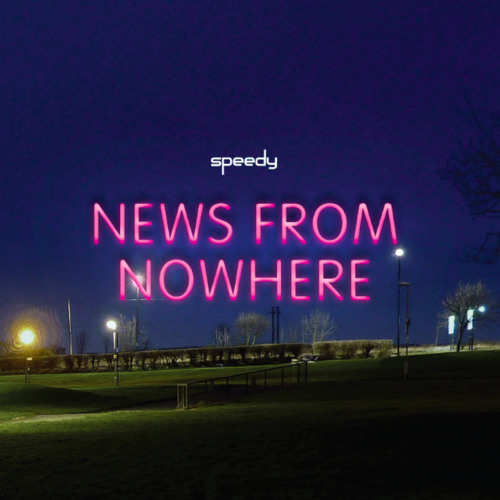
Prior to the announcement that their long-lost debut album was to be belatedly released by The Lost Music Club, I'd never even heard of Speedy, much less listened to any of their songs. Nonetheless, I was well up for News From Nowhere, because it represented an opportunity for me to enjoy the heady rush of Britpop firsthand (I was a little too young to appreciate the movement in its heyday; for reference, Country House and Roll With It were released on the day I turned 4).
On Friday, I offered my own take on of Pulp's platinum-selling fifth album, Different Class. While the references to social classes (working class, middle class, etc.) are plain to see in songs like Common People and I Spy, there are several other songs on the album that don't seem to have any relation to the class theme at all.
But I'm halfway through arguing that actually, every song on this album draws a line between people; it's us versus them every step of the way and whether it's nerds vs. bullies (as on Mis-Shapes), the sexually active vs. the not so sexually active (Live Bed Show), or just upper class vs. lower class, the record is rife with examples of people being put in categories. The characters that populate these songs (and the monochrome people on the front cover) are the misfits, the singletons, the burnouts, and the people who never really had a chance, and they're all looking to change their lives and experience something more.
Before you read on, be sure to read part one first. Done? Then let's move on to Side 2...
Something Changed There's a bit in Mis-Shapes where Jarvis Cocker starts talking about the lottery ("check your lucky numbers, that much money could drag you under"), and at first I didn't really get what that had to do with the. But looking at it again, I think it's just another criticism of the knuckleheads who terrorise him and his misfit mates; in spite of their power, the bullies are as working class as their prey, and instead of seeking an education and climbing the social ladder by brainpower (which is Jarvis's proposed tactic), they just spend all their money on lottery tickets in the hope that they'll get lucky.
What does this have to do with Something Changed, you ask? Well, this song is all about getting lucky and winning your way out of a shitty situation; the only difference is that Jarvis is sick of being single, and tonight he wants to win the lottery of lurve. The very first line is "I wrote this song two hours before we met", so we know that the love song that follows is hopeful rather than thankful. He's trying to bend fate to his will, and if he concentrates hard enough, perhaps something will change. Not unlike Live Bed Show, this is one where being single and unloved is analogous to being of low social standing, and just as the antagonists of Mis-Shapes look to the lottery to change their lives, Jarvis is hoping that some force higher than himself will intervene and find true love for him:
"Do you believe that there's someone up above? Does he have a timetable directing acts of love?"
Sorted for E's & Wizz This one's a little different to the others. Instead of saying "we're here, you're there, and here's the line between us", it says "here we all are together" and then goes on to wonder whether or not that's actually a good thing. At a big rave party, there is no class, no division, just "twenty thousand people standing in a field". And it's great, for a bit, but eventually you'll have to "come down" and retake your place in society, however degraded and bland that may be. Frustrating, perhaps, but the alternative might be even worse - who'd want to be one of those people that "never come down"?
F.E.E.L.I.N.G.C.A.L.L.E.D.L.O.V.E. Man, that title's a pain in the bum to type out. While the chap who wrote Something Changed was desperate for love to descend from the heavens and sort out his life, the narrator of this song has stumbled into love and he makes it sound like a singularly unpleasant experience. Chocolates? Roses? Hollywood romance? No, no, and nope; this is a different, "dirtier" class of love, with chemical reactions and sick feelings in your stomach. It doesn't make no sense, it's not convenient, it doesn't fit your plans, but you've got that taste in your mouth and you've no choice but to act on it.
Underwear As with I Spy, I'm not totally sure of what's happening in this song. But at the core of things, we seem to have a girl who is about to give herself to a bloke, even though she's not entirely sure she wants to. And then there's Jarvis, on the sidelines, complaining that he would die to see her semi-naked. There's a hint of jealousy, that 'why do girls like guys like them instead of nice lads like me?' sentiment that's a common side dish for many a high school crush. While the unnamed "him" feels entitled to bit of bump and grind, Jarv would have given his whole life just to see the girl in her underwear. There's something slightly naive about the lyrics, as if the narrator doesn't really understand that there's anything beyond underwear. But that's kind of the point - he's painting himself as a different class of suitor, a more friendly and less lecherous prospect than the guy she's about to get with.
Monday Morning This one's kind of a sequel to Mis-Shapes, I reckon. The underdogs have finished school and they're ready to go out, grab the bull by the horns, and leave their oppressors behind. But instead of making the world a better place and stepping into "the light of a new day dawning", they opt to throw it all away; some get boring nine-to-five jobs, while others don't bother with work at all and jump head-first into a hedonistic party lifestyle ("I just can't seem to spend a night at home", laments Jarvis). Either way, they end up in a rut, a repetitive seven-day cycle that always comes back to Monday morning. Whether you're at work or just struggling to overcome your latest hangover, it's not a pleasant place to be.
Bar Italia The album ends with an interesting twist on the working class/middle class divide. It's a new morning, and while the posh, middle-class businessmen are all heading off to work, the working class people have just emerged from the night's revelry and they're staggering off to a diner to get some breakfast. I haven't really commented on the druggy associations of the word 'class', but since there are three tracks on the album that deal with comedowns and hangovers (Sorted, Monday and Italia), I suspect that's probably an intentional pun. This is the lifestyle that the Greek girl in Common People wanted to get in on, but if Bar Italia's bleary-eyed narrator is to be believed, it's not all that desirable. We end in a Soho bar "where all the broken people go", and no sane listener would be left wanting to live the life they've just had a glimpse of.
The title of Pulp's magnum opuscan be taken in two ways. It could just be a slightly tongue-in-cheek comment on their own brilliance, but if you've heard Common People, you've probably realised that, hey, the title of its parent album doubles as a reference to social classes, too! Different classes rub up against each other many times over the course of this record; DC's Wikipedia entry suggests that "the British social class system...was a theme of some of the songs on the album", but today I'm going to argue, track by track, that there's a tiny class war being fought on every song. No exceptions.
Mis-Shapes A pretty straightforward one to start off with: you've got the nerds like Jarvis Cocker, and you've got the thickos who terrorise him. They daren't go into town, they perpetually afraid of getting "a smack in the mouth", but Jarv & Co are determined to turn the tables with "the one thing we've got more of...and that's our minds!" It's brain versus brawn, simple as that.
Pencil Skirt I've read one interpretation of Pencil Skirt which suggests that the song's protagonist is, in fact, a dildo. I reckon it's just a guy who's seeing an engaged woman, providing her with something wild and bad and fun to make up for the fact that her husband-to-be is a little ho-hum. She feels bad about cheating, but he doesn't care - he comes over anyway and gives her the rough love that her fiancé can't provide. He's a different class of lover; it's a battle between dull-yet-reliable husband material and fierce, adulterous pleasure, and the woman is struggling to pick a winner.
Common People The class war in this one is kind of self-evident, so let's just have a listen and remind ourselves of what a great song this is:
I Spy I've never been entirely sure of what's going on in this song, but here's my best guess: the narrator is a proud working-class chap, and he's kind of annoyed that his former best friend has gone on to become a successful, wealthy businessman. He feels betrayed that his pal "made it out" while he stayed "stuck" in his humdrum existence, and so he takes revenge on his chum by shagging his wife. The lyrics are packed with disdain for middle-class BS; witness this little excerpt:
"Grass is something you smoke, birds are something you shag, take your year in Provence and shove it up your ass!"
We then hear him talking to the wife, offering to "take her from this sickness, dinner parties and champagne" and make her body "sing again". Much like the narrator of Pencil Skirt, he's offering unhinged pleasure instead of the comfortable, boring lifestyle to which she's accustomed.
Disco 2000 My favourite example of the 'class war' theme. The big paradox of this song is summed up in four lines:
"Your house was very small, with wood chip on the wall, when I came 'round to call, you didn't notice me at all"
Deborah (deb-uh-ruh) is a working class lass, but while her house is far smaller and more squalid than what the protagonist is used to, she's still immeasurably more popular than he is. School life has a social system all its own, and while our man is probably pretty well-off in his home life, he's a complete nobody in the school yard. In the musical Blood Brothers, twin boys live completely different lives after one is adopted by a rich couple and the other is left with his working-class mum; Deborah and Jarvis were born within an hour of each other, and yet he can never hope to reach the same social standing as her.
Live Bed Show Financial situations aside, one of the biggest class divides is the one that lies between those who are getting laid and those who aren't. The lady in this song made the uncomfortable transition from one side to the other, and she didn't go in the right direction. Landing in the singles bin is not much fun at all, and given how bland her life sounds now ("if this show was televised, no-one would watch it"), she might as well be in the poorhouse.
I'll tackle the second half of the album on Monday. Brace yourselves - it gets a bit complicated on Side 2.


.jpg)